What Glazing Actually Does
Greenhouse cladding performs three functions simultaneously: it admits solar radiation to drive photosynthesis, it retains heat generated inside the structure, and it excludes precipitation and wind. The trade-offs between these three functions — light transmission versus thermal resistance, durability versus weight, upfront cost versus replacement interval — differ substantially between material categories. In Canadian conditions, where winter heating costs can represent 30–50% of operating expenses in a commercial greenhouse, the thermal resistance (R-value) of the glazing material is as important as its light transmission number.
Understanding the difference between total solar transmittance (which includes infrared heat) and PAR (photosynthetically active radiation, 400–700 nm) transmittance is also important for growers. A glazing with 88% total solar transmittance may deliver only 80–82% of usable PAR to plants if the material absorbs more strongly in the visible spectrum. Diffuse versus direct light transmission is a separate and increasingly important consideration: glazing that converts direct sunlight into diffuse light can improve yield in dense canopy crops by reducing shading between leaves.
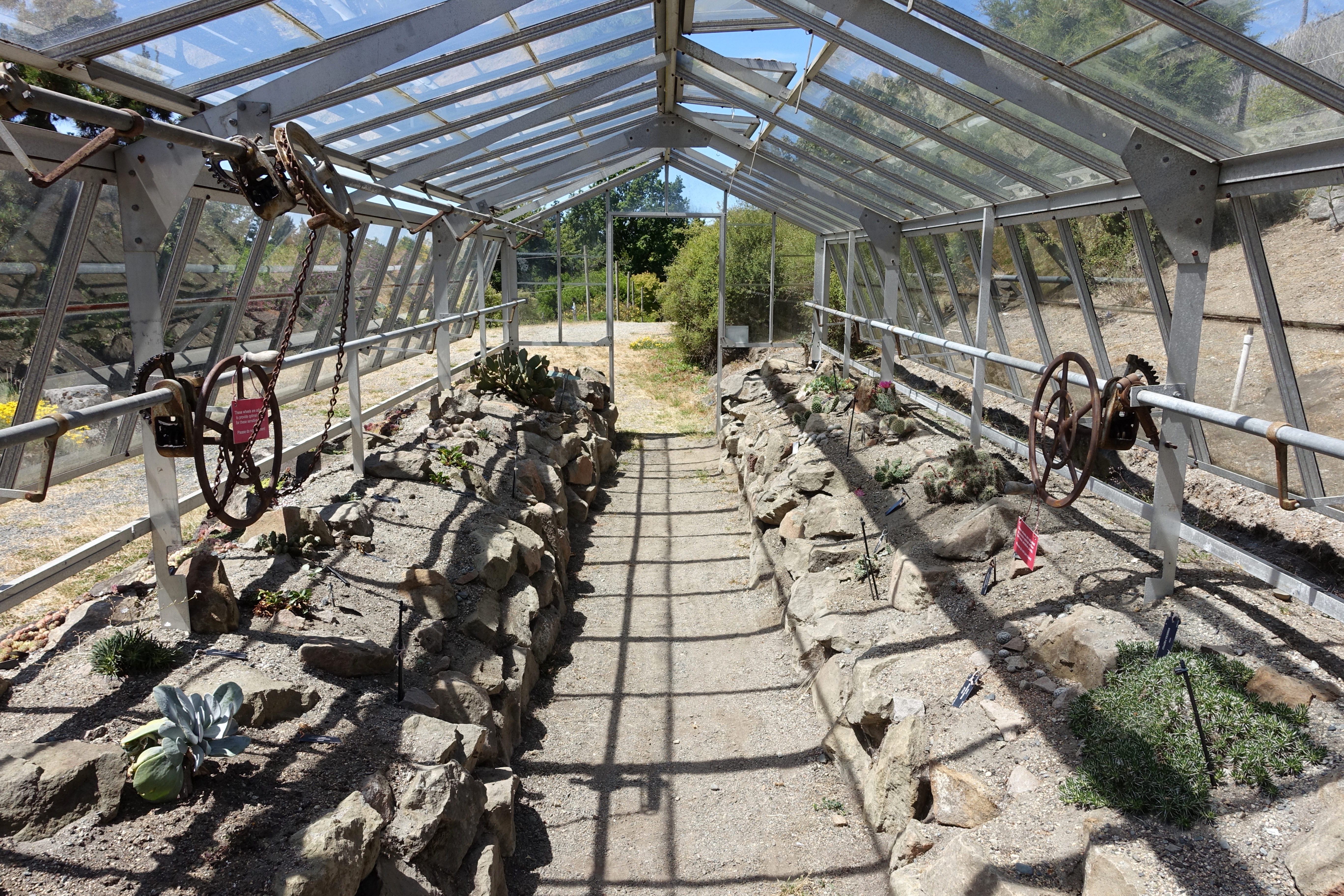
Single-Pane Float Glass
Light transmission
Standard 4 mm horticultural glass transmits 88–90% of total solar radiation and 85–88% of PAR. It does not diffuse light — sunlight passes through as directional rays, which produces defined shadow patterns on bench and growing surfaces. For crops grown at low density with good row orientation, this is acceptable. For high-density crops — lettuce, spinach, basil — diffuse light from polycarbonate or coated glass often produces more even growth.
Thermal performance
A single pane of 4 mm float glass has a U-value of approximately 5.8 W/(m²·K), equivalent to RSI 0.18. For perspective: a 10,000-BTU propane heater running in a greenhouse clad entirely in single-pane glass will exhaust approximately 30–35% more fuel per hour on a –15°C night compared to the same greenhouse clad in 16 mm twin-wall polycarbonate. This difference, compounded over a Canadian heating season of 150–200 days, adds up to a substantial operating cost premium for glass-clad structures that run year-round.
Snow load capacity
Tempered safety glass in 4 mm or 6 mm thicknesses installed in properly designed framing handles standard Canadian snow loads when the panel size is kept below 1.0 m² and the frame pitch exceeds 26.5° (1:2 rise-to-run). Above that panel size, 6 mm is the minimum. Annealed (non-tempered) horticultural glass should not be used in regions with design ground snow loads above 1.5 kPa.
Cost and lifespan
Tempered horticultural glass in 4 mm thickness runs $18–28 CAD per square metre supply-only in Canada. Installed cost in a properly glazed structure typically adds $15–25/m² for labour and sealing. Glass has an indefinite lifespan if not broken — a well-built glass greenhouse can last 40+ years with periodic re-puttying or re-gasket work. Hail is the primary loss risk; one severe hailstorm can require replacing 20–50% of a glass envelope.
Twin-Wall and Multi-Wall Polycarbonate
Thermal properties across panel thicknesses
Polycarbonate panels derive their insulating value from the air columns trapped between structural walls. Thicker panels with more internal channels provide higher R-values at the cost of slightly reduced light transmission:
| Panel Thickness | R-Value (imperial) | RSI (metric) | Light Transmission |
|---|---|---|---|
| 6 mm twin-wall | R-1.6 | RSI 0.28 | 82–85% |
| 8 mm twin-wall | R-2.0 | RSI 0.35 | 80–83% |
| 10 mm triple-wall | R-2.5 | RSI 0.44 | 75–78% |
| 16 mm 5-wall | R-3.0 | RSI 0.53 | 72–76% |
| 25 mm 5-wall | R-4.0 | RSI 0.70 | 65–70% |
For cold-climate year-round growing in Zone 3–5, 16 mm panels represent a practical balance point: thermal resistance is meaningfully better than glass, light transmission remains adequate for most crops, and the panel is stiff enough to handle the snow loads encountered across most of southern Canada without additional structural support at standard purlin spacings of 600–900 mm.
UV stabilisation and lifespan
Polycarbonate yellows under UV exposure if the anti-UV co-extruded surface layer is inadequate. Quality panels from established manufacturers carry 10-year light transmission warranties with a maximum 6% drop. Budget panels without proper UV co-extrusion can yellow noticeably within 5–7 years, reducing light transmission by 15–25% — a yield-relevant reduction for crops growing under winter light conditions. When purchasing, verify that the UV-resistant co-extruded surface is on both faces (important for regions with high reflective light from snow cover on the ground).
Impact resistance and hail
Polycarbonate is effectively unbreakable under hail impacts that would shatter glass. This single characteristic makes it the default choice for greenhouse construction in hail-prone regions of the Prairie provinces and southern Alberta. There is no realistic residential or small commercial greenhouse scenario in Canada where polycarbonate panels fail under hail — the failure mode is surface crazing or yellowing over years, not acute fracture.
Double-Layer Polyethylene Film
Construction and inflation
Double-layer poly film systems use two layers of 6-mil (150-micron) polyethylene film separated by an air gap of 25–40 mm maintained by a continuously running inflation blower. The air gap provides RSI 0.35–0.45 (R-2 to R-2.5) thermal resistance — comparable to 8–10 mm twin-wall polycarbonate — while using far less material by weight. A standard high-tunnel or Quonset-style greenhouse uses poly film as the primary cladding because it conforms to curved frame profiles that flat polycarbonate panels cannot follow.
Light transmission
New 6-mil clear polyethylene transmits 87–90% of total solar radiation — comparable to glass, and better than most polycarbonate at the same thickness. Some films include IR-blocking additives that reduce nighttime heat loss through long-wave radiation re-emission; these films reduce light transmission slightly (to 83–86%) but can cut nighttime heating load by 12–18% in clear-sky conditions, which is significant in Prairie winters where radiative cooling is the dominant heat loss mechanism.
Replacement cycle
The major limitation of poly film is its short lifespan: 3–5 years for most 6-mil products under Canadian UV exposure conditions. Premium 4-year or 6-year rated films extend this range. Replacement is straightforward on hoop-style structures and typically takes one to two days with two people for a 100–200 m² greenhouse — but it is a recurring cost that doesn't exist with polycarbonate or glass. Budgeting $0.80–1.20 CAD per square metre annually for amortised film replacement is realistic for poly film structures.
Summary Comparison
| Glazing Type | PAR Transmission | Best R-Value | Lifespan | Hail Resistance | Installed Cost (CAD/m²) |
|---|---|---|---|---|---|
| Single-pane glass (4 mm) | 85–88% | R-1 | 40+ years | Low | $33–53 |
| Twin-wall poly (10 mm) | 75–78% | R-2.5 | 10–20 years | Very high | $22–38 |
| Multi-wall poly (25 mm) | 65–70% | R-4 | 15–25 years | Very high | $38–60 |
| Double-layer poly film | 83–90% | R-2.5 | 3–6 years | High | $8–14 + recurring |
Regional Considerations for Canada
In British Columbia's lower mainland and Vancouver Island, hail is infrequent and winter temperatures rarely fall below –10°C. Single-pane glass or 8 mm twin-wall polycarbonate both perform well, and the higher light transmission of glass is often worth the cost premium for high-value crops like cannabis or tropical ornamentals.
On the Prairies (Alberta, Saskatchewan, Manitoba), hail frequency, wind loading, and design temperatures below –35°C shift the balance firmly toward multi-wall polycarbonate (16 mm minimum) or double-layer poly film on curved hoop structures. Glass is used in the Prairie provinces primarily in heated urban or institutional settings where hail risk is accepted and aesthetics matter.
In Ontario and Quebec, 10–16 mm twin-wall polycarbonate covers the largest share of the hobby and small commercial greenhouse market. Design snow loads in northern Ontario and Quebec push frame design requirements upward, which in turn means shorter panel spans and more structural members — reducing the area of glazing panel that needs to bridge between supports.
For how glazing choice connects to heating system sizing, see the article on Heating and Ventilation for Year-Round Greenhouse Production. For frame design considerations that affect glazing span requirements, see Greenhouse Frame Types: Steel, Aluminum, and Wood Compared.
Last updated: May 8, 2026.